Saturday, 19 November 2016

Propaganda Reflection | Control Room

Prompt: It is okay for the government to mislead to promote security?

I disagree with this prompt.
As seen in the documentary Control Room, the government often silences certain information and emphasizes other information. Often, information from testimonials or statements are taken out of context by the media, ultimately influenced by the government. Often taken out of context, the media represents situations and ideas in a different, biased light.

Within the documentary, it was evident that the Americans were trying to present themselves as the good-doers. To do so, they produced and influenced the media to be univocal about the War in Iraq. The government of the United States ultimately controlled the information being released to the press to mislead. The motive behind this was to promote security, namely of the US intervention in Iraq. They feared that if too much information were leaked, it would become a threat to the safety of the intervention. An example was the US soldier defending why the US government hadn't released the exact location of the US troops after 'reoccupying' the land.

The media broadcast Al Jazeera opposed in governments misleading to promote security. They did so through multivocality within their broadcast, instead of propaganda and bias information. This channel, in particular, showed a more honest perspective on the Iraq War, in my opinion, than the news influenced solely by the US press releases. By providing as many, non-radical or pure propaganda, viewpoints within their broadcast, Al Jazeera allowed the audience to understand the Iraq War much better as they implied the effects on all different groups.

This was unlike the univocal US-influenced news released by media outlets as these only focussed on the Americans being the center of importance, rather than showing the implications the interventions had on the local people. Al Jazeera displayed the bitter truth, the reality that the governments didn't want to show their people.

Despite the intentions of promoting security, it is generally better not to mislead the people. However, there are of course exceptions to these if the information released imposes a major threat on specific groups of people. However, it then may be more beneficial not to publish certain details fully until it doesn't impose such a big threat anymore, rather than completely misleading the audience.

Documentary: Control Room

Monday, 14 November 2016

Parody | Media bias

Report: Trump was unfamiliar with the scope of the president's job when meeting Obama

The following article contains a bias towards the political issue of the newly elected president of the United States, in which many doubt Donald Trump's competency to run as president. This article leans towards a democratic point of view, opposing the Republican ideology of Trump. 

"President-elect Donald Trump celebrated his status as a Washington outsider during his campaign for the presidency. But his lack of familiarity with the US government appears to be coming into view as he transitions to the White House. During Trump's private meeting
with President Barack Obama on Thursday, Trump "seemed surprised" by the scope of the president's responsibilities, according to a report from The Wall Street Journal. Trump's aides were also apparently unaware that the entire staff of the president working in the White House's West Wing would need to be replaced, according to The Journal. Obama reportedly will spend more time counseling Trump about the presidency than most presidents do with their successors. Trump and Obama were highly critical of each other during the campaign season but appear to have struck a conciliatory tone since Trump's election, at least publicly. "I want to emphasize to you, Mr. President-elect, that we now are going to want to do everything we can to help you succeed, because if you succeed, then the country succeeds," Obama told Trump in front of reporters on Thursday. Trump called Obama "a very good man" during the session."


Parody Pastiche, using Republican bias
"As Donald Trump's celebrated the success of his campaign for the presidency, Trump had a private meeting with President Obama on Thursday. Despite being a Washington newbie, Trump's arrival at the White House will be well-received as Trump will get a better scope of his responsibilities under the guidance of former President Barack Obama. Trump will arrange many affairs before his official presidency on January 20th of 2017.  Despite Trump being critical of Obama, h
e calls him "a very good man" during the session after Obama's advice in running as President.


Source: Business Insider, Wall Street Journal. Nov. 13, 2016.http://www.businessinsider.com/trump-obama-meeting-2016-11?utm_content=buffer2eee4&utm_medium=social&utm_source=facebook.com&utm_campaign=buffer.

Tuesday, 4 October 2016

Act V, Scene III | Coriolanus IOC Outline

Act V, Scene III


Introduction and Context:
  • This passage is from Coriolanus
  • Political play was written somewhere between 1605 and 1608
  • Significant to time period Shakespeare lives in, lots of political change after death of queen Elizabeth in 1603
  • This passage is situated near the end of the play


Overview:
  • Martius (Coriolanus) joins forces with Aufidius
  • Coriolanus and the Volscian forces approach Rome
  • The three V’s show up
  • Volumnia (and Virgilia) attempt to persuade him not to attack Rome
  • Volumnia begs Martius to remain peaceful, or else he would lose his nobility, honor, and respect of others
  • Coriolanus starts to get sentimental and softens


Structure:
  • The structure is linear
  • No flashbacks and -forwards


Purpose and Significance
  • To reestablish the theme of redistribution and change of power
  • To further develop Coriolanus’s complex relationship with his mother
  • To stress Coriolanus’ need to adapt to the transition of power in order to retain his honor and respect
  • Coriolanus’ nature to resist shifts in power
  • Possibly foreshadows Aufidius’ revenge later in scene V


Analysis

Lines 1-21:

Criteria A:        

This section of the passage displays Volumnia’s desperation to change Coriolanus’ mind. She tries to emotionally manipulate in saying that if “Thou art not honest; and the gods will plague thee” (line 3). However, she makes her admiration for her son’s hard power very clear within the passage, as she kneels for him “let us shame him with our knees” (line 6). However, it is important to acknowledge the Volumnia’s contradictory speech, in which she both admires and despises her son for his headed handhold to his hard power, she does this to emotionally attempt to manipulate him into agreeing to peace. “longs more pride than pity our prayers” (7-8) Volumnia however shows her true self when she displays her power over Coriolanus in line 11 to 20. She attempts to do this through emotional manipulation, allowing Coriolanus to feel empathetic and regretful for letting down his mother. This therefore indicates Volumnia’s speculation that Coriolanus will fail them, being considered powerless by his mother by his ignorance. “This boy, that cannot tell what he would have but kneels and holds bans for fellowship” (line 12-3)

Criteria B:
Shakespeare makes use of stage directions to amplify the contradiction position which Volumnia takes towards Coriolanus, where she is obeying by kneeling for him, yet she shames him for favoring his will for power over the relationship with his family. Volumnia amplifies the dramatic irony, in which the reader is fully aware of Volumnia’s original intentions, by stating that she will gives up on Coriolanus. “so we will home to Rome” (line 10) Volumnia’s attitude, still consciously manipulative, transitions to a defeated attitude towards her son. This can be seen through use of stage directions. Within line 11 to 19, Volumnia uses imagery to appear more persuasive towards the audience. Her use of language shows her power over her son as she has now, after persuading the audience, persuaded her son. This is seen through stage directions, “He holds her by the hand” (line 21)


Lines 21-49:

Criteria A:        
Coriolanus is hit by consciousness of the earnest of his actions, in which he immediately apologizes to his mother. “O mother, mother! O! You have won a happy victory to Rome” (line 27-8). This is very significant as the power within this passage, shifts from Coriolanus to his mother. Coriolanus was represented as being the dominant character in the beginning, but now seems to obey his mother instead (the roles have reversed). He recognizes Volumnia’s power as she has potentially saved her city from destruction. This breaks down Coriolanus’ image of being invincible, as he is defeated by his own mother. This exposes his character to mortality, foreshadowing his death “Most dangerously you have with him prevail’d, if not most mortal to him” (line 30-1).

Criteria B:        
Through the use of repetition, Coriolanus’ awareness of his resistance to change is dramatized. Not only does the repetition of “mother, mother” (line 24 and 27) show his sudden consciousness, it also signifies the awareness of Volumnia’s impact of her power on him. It is even described as a “unnatural scene” (line 25) as this sense seems unexpected to Coriolanus. Aufidius’ sarcastic remark about Volumnia’s impact foreshadows Aufidius’ plans of revenge, as he displays clearly an acted sense of sympathy which is not sincere “I was moved with withal” (line 37) The metaphor “Mine eyes to sweat compassion” reinforces Coriolanus’s surrender of power as he is enormously inflicted.


Conclusion

This specific passage in the play is significant in reestablish the theme of redistribution and change of power from Coriolanus to Volumnia, who will return to Rome as a hero. This is shown through Coriolanus’ sudden conscience, revealing his complex relationship with his mother in which Volumnia overpowers him. Coriolanus’ infliction of becoming ‘mortal’ exposes his vulnerability, which is taken advantage of in Aufidius’ revenge plot which is foreshadowed.


Passage:

VOLUMNIA
And die among our neighbours. Nay behold’s:
This boy that cannot tell what he would have
But kneels and holds up bands for fellowship,
Does reason our petition with more strength
Than thou hast to deny’t. Come, let us go:
This fellow had a Volscian to his mother;
His wife is in Corioli and his child
Like him by chance. Yet gives us our dispatch:
I am hush’d until our city be a-fire
Ande then I’ll speak a little.
He holds her by the hand, silent


Friday, 2 September 2016

This is water - Wallace's theory of education and Munro

In his commencement speech, Wallace adresses the impact of education later in life. He suggests that through acquiring education, one can be well-adjusted, sympathetic and conscious of the world. And by doing so, true freedom can be achieved.
Wallace's theory points out that the liberal-arts system of "teaching you how to think" is extremely important in choosing how to absorb views of the world. He states that through the present education system, students are able to "control over how and what you think. It means being conscious and aware enough to choose what you pay attention to and to choose how you construct meaning from experience."
Wallace touches base on a typical day in and day out example which is suggested to all be too familiar to the attending parents of the graduates. Through the example of an overworked person getting stuck in traffic jam, realizing he needs to go grocery shopping at the peak time, waiting for what seems like hours queuing up at the check out desk, David Foster Wallace stresses on the importance of taking a different approach on what seems to be depressing reoccuring events inmost people's daily lives. He states that if not taken a different approach on these situations "you will die a million deaths before they finally plant you".
He offers a significant solution to the depressing reality of adulthood which the graduates will soon face, they will have to become consciously aware of the possible scenarios which construct the present, thus creating meaning from the experience. By using the control over how you think, which the education today teaches us to do, Wallace suggests that this is what prevents "dying a thousands deaths" in life. Thus, being the well-adjusted; sympathetic and conscious person education has shaped you in, one will be able to achieve true freedom in life by overcoming these daily obstacles.
This therefore suggests that education, perhaps literature being thought, is crucial in developing empathy and emotional intelligence in life.
Munro's literature is therefore quite significant as it is proven to develop a better emotional intellegence amongst it readers. Like Wallace stated, Munro arouses empathy towards the different characters who all display different lives of ordinary people. This may therefore show that through this understanding of other people's lives aqcuired by reading Munro's literature, one may become better well-adjusted, conscious and sympathetic towards others by putting ourselves into the possible situations of others.

Thursday, 18 August 2016

The battle of the languages

A battle of between my native mother tongue Dutch (Flemish) and between the English language.

During my one and a half month long stay in my home country, I came to this question. Throughout the year I would use English 70% of the time to communicate with my peers, including school. Leaving a mere 30% of communicating in my mother tongue. Does that make English the dominant language in my life? maybe. But as I spend more than a full month speaking only Flemish with my family and friends at homeI realized that maybe there is no need to define which language dominates my life in general. I figured that my ability to fully express myself changes depending on where I am. Quite logically, I'll be able to express and tell about my experiences in more depth if I do so in Dutch than in English. This can be explained by the fact that I had talked and experienced these things with people who speak Dutch like me. Thus, I also picked up a few more dialect words and sayings which may describe these specific ideas better than I possibly could in English. On the other hand, I found out that I can talk about more intellectual topics that was discussed during my education much more easily using the English language than the Dutch, which seems logic since my education is fully embodied in English. As a conclusion, the ability to speak using one or another language is a constant-changing ability which adapts to the situation and people you are surrounded with.

Friday, 1 July 2016

When in Moscow...

Do take the train at least once...
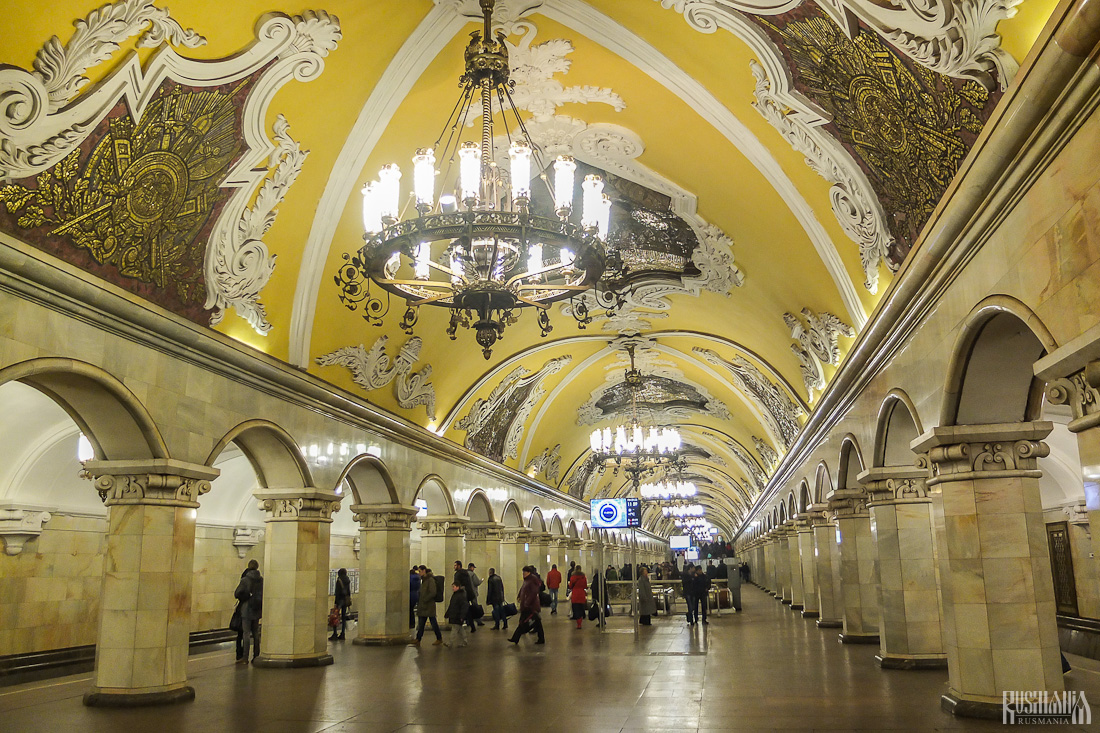
After our 5-day visit to Moscow, we recognized the effectiveness of the train. Moscow, in particular, is known for the hour-long traffic jams on the rings. Moscow consists of 'rings' of roads, thus enlarging the city by building larger rings around the present rings. From this system of roads comes the joke of the Meir of Moscow being called the 'Lord of the Rings'. The subway stations are strategically placed all around the huge vibrant city of Moscow, making it easy to quickly take a train to take you to another side of Moscow. The subway stations themselves are already worth a visit, looking like a museum themselves. Walking in the subway stations and taking the endless escalators gives the idea of travelling back in time, to the Russian Sovi
et Era. With long Escalator tunnels with engraved with unique figures depending on the station. The walls are filled with ancient murals, all unique on each station. The trains themselves beautifully restores. No need to visit any museums after seeing this must-see!

Do try out to communicating in basic Russian...
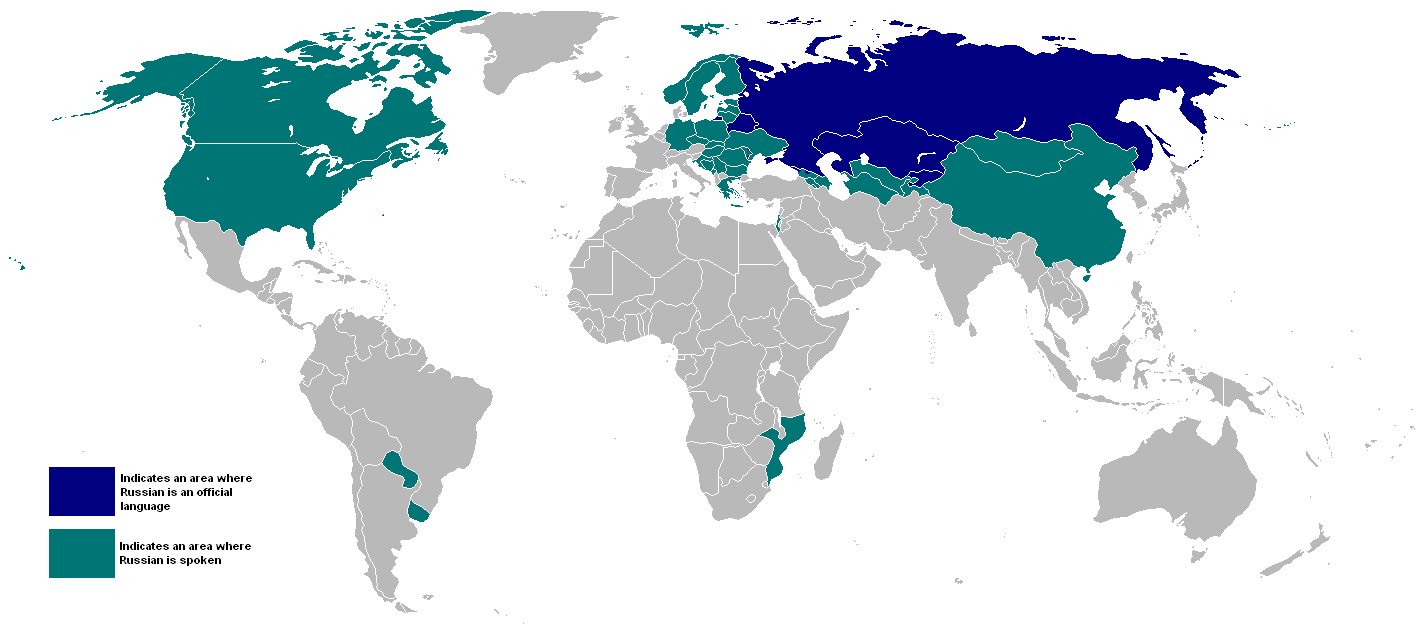
Despite many young Russians being able to speak flawless English, a basic knowledge of Russian comes out very handy when seeniy” meaning dark blue) and голубой (pronounced as “goluboy” meaning light blue). Did you know that aside from being the 7th most spoken language in the world, it is the leading language for space? Speaking to a Russian in their language will not only make them feel more sympathetic towards you for the effort, but it may expand your understanding and appreciation of the culture more.
travelling in Russia. Whether it is to be able to read the directions or order
delicacies in the local restaurants, Russian is hugely important when communicating with the Russian 'locals'. Firstly the Russian Cyrillic Alphabet consists of 33 letters, unlike the 26 letters in the Roman alphabet. The language itself consists of approximately 200,000 words which are far less than the average 1,000,000 words in English. However, a Russian person will be able to describe and distinguish different hues of blue much better than native English speakers. They categorize blue hues into two categories before specifying them even further: синий (pronounced as “

Do embrace the many ethnicities within the Russian culture...
Russia is so big that the local population is a hodgepodge of different ethnicities. There are approx. 160 different ethnic groups across Russia. Thus it is definitely worth a try to try different delicacies from the different groups, for example, Georgian bread or Chuvash Khash.

Do Enjoy...
Enjoy embracing the Russian ways of living as well as the architecture and food during your visit to Russia as much as I did!